

Philosophy Project
Thomistic Philosophy in Dialogue
Philosophy necessarily involves an ongoing dialogue with contemporary questions and issues. At DSPT, our approach to philosophy grounds students in the classical, medieval, modern, and contemporary philosophical traditions through a Thomistic lens, forming them to bring their unique insights into conversation with contemporary debates in metaphysics, epistemology, anthropology, social sciences, technology and much more.
Philosophy Project
Our faculty and students collaborate within a thematic focus – what we call the Philosophy Project. Every 3 - 6 years, the Philosophy department initiates a new Project around a pressing theme in contemporary philosophy. Each project brings guest lecturers from around the world, research and translation opportunities and co-curricular events. In this integrated environment, students gain a deeper understanding of the subjects while making valuable connections.
Project 2020-2026: God-Made Manifest
Revelation, Natural Theology, and the Human Experience of God
In an increasingly secular world, God may seem absent…
As religious faith seeks to find new ways to inform the public square and the academy, it is time to articulate God’s presence by the voice of reason and philosophy. God is not silent, God is not absent; God is made manifest in a variety of ways, many of which can be discerned even by those who do not have religious faith. The Catholic faith itself confirms as much: the First Vatican Council teaches that the one true God can “be certainly known by the natural light of human reason through created things.”
DSPT faculty involved in the project
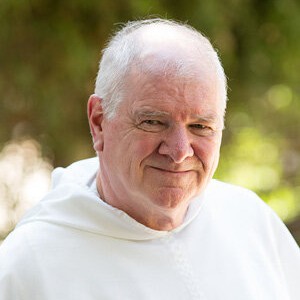
Michael Dodds, OP
Professor of Philosophy & Theology
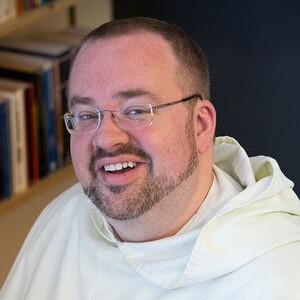
Justin Gable, OP
Associate Professor of Philosophy | Philosophy Department Chair
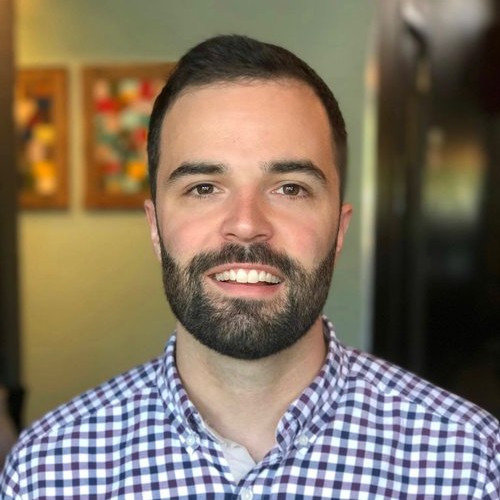
James Kintz, Ph.D.
Assistant Professor of Philosophy
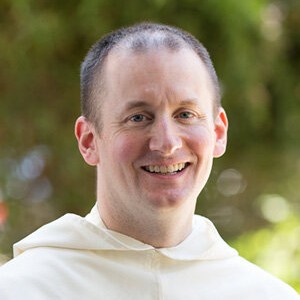
Bryan Kromholtz, OP
Professor of Theology
Anselm Ramelow, OP
Professor of Philosophy
Margarita Vega, PhD
Professor of Philosophy
God-Made Manifest - Philosophy Project Seminars
Additional Resources
Topical elective courses will be offered during this Philosophy Project. You may also register for courses at UC Berkeley. Many of the core DSPT philosophy courses, from which you will choose to fulfill your MA program requirements, are relevant to the topic. For example:
-
Philosophy of Nature (PH-1056)
-
Philosophical Anthropology (PH-2040)
-
Theory of Knowledge/Epistemology (PH-1065)
-
Metaphysics (PH-2050)
-
History of Ancient Philosophy (PHHS-1050)
-
History of Medieval Philosophy (PHHS-1051)
-
History of Modern Philosophy (PHHS-2000)
-
History of Contemporary Philosophy (PH-2001)
Frequently Asked Questions
Project 2017-2020: Person, Soul and Consciousness
Our inaugural Philosophy Project focused in on questions related to neuroscience, bioethics, personal identity, the nature of the soul, consciousness and human rights. This Project was kicked off by the 2017 Dominican Colloquium in Berkeley.
Seminars
- Thomist Foundations: History and Metaphysics of the Concept of the Person
- Personal Identity as Individual and Relational
- Person in Neuroscience: Consciousness and Free Will
- Consciousness and the Other: Phenomenology and Postmodernism
- Personhood and Consciousness as Ethical Problem
- Personhood, Religion and Human Rights